Parodos / Exhibitions
I. Paroda galerijoje „Šofar“
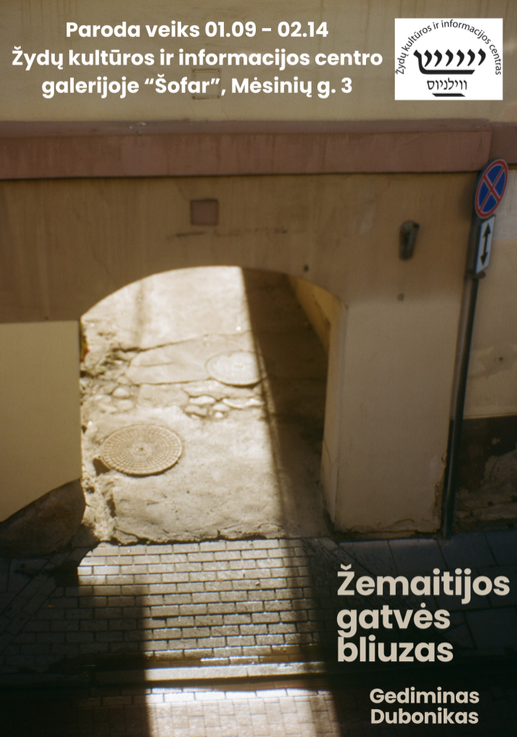
Ar vienos Vilniaus gatvės atspindžiuose galima įžvelgti visos tautos istoriją? Kodėl tai, kas vyko XX amžiuje, nebuvo vien šio laikmečio reiškinys, o tik istorinių įvykių tąsa?
Apie tai, sujungęs senovines technologijas ir modernaus meno bruožus parodoje „Žemaitijos gatvės bliuzas“ pasakoja parodos autorius Gediminas Dubonikas.
„Tai kūriniai, kalbantys ne tik apie Vilnių, Lietuvą, bet ir visą Europą. Ir ne tik XX amžiuje. Juk to, kas vyko II pasaulinio karo metu, apraiškų buvo ir Viduramžiais bei dar anksčiau. Parodos žiūrovui primenu tokius istorinius įvykius, kaip knygų deginimas, priverstinis darbas, gyvenimo getuose aspektai, pogromai, žydų turto naikinimas“, – sako jis.
Pagrindinė G. Duboniko kūrybos priemonė – senas angliškas „Hawk Eye“ fotoaparatas, pagamintas apie 1930 m. Tačiau tai nėra fotografija – kūrinius jis vadiną moderniojo meno darbais, nes pagalbinė priemonė, greta nuotraukose užfiksuotų Žemaitijos gatvės vaizdų – įspėjamieji lipdukai. Šie lipdukai tarsi tiltas, sujungiantis klasikinį ir modernų meną. Žvelgdamas į juos parodos lankytojas atras ir supras tai, ko vien tik fotoaparato objektyvas negalėtų perteikti.
Paroda „Žemaitijos gatvės bliuzas“ veiks 01.09 – 02.14 Žydų kultūros ir informacijos centro galerijoje „Šofar“, Mėsinių g. 3.
EN
Exhibition at the „Shofar” Gallery
Can the history of an entire nation be seen in the reflections of one Vilnius street?
Why was what happened in the 20th century not just a phenomenon of this era, but only a continuation of historical events? The author of the exhibition, Gediminas Dubonikas, who combined ancient technologies and features of modern art in the exhibition “Žemaitijos gatvės blyuzas” (Samogitian Street Blues), talks about this. “These are works that speak not only about Vilnius, Lithuania, but also about the whole of Europe. And not only about the 20th century. After all, what happened during World War II had manifestations in the Middle Ages and even earlier. I remind the viewer of the exhibition of such historical events as book burning, forced labor, aspects of life in ghettos, pogroms, and the destruction of Jewish property,” he says.
The main creative tool of G. Dubonikas is an old English “Hawk Eye” camera, made around 1930.However, this is not photography – he calls the works works of modern art, because the auxiliary tool, in addition to the images of Žemaitija Street captured in the photos – warning stickers. “These stickers are like a bridge connecting classical and modern art. Looking at them, the visitor to the exhibition will discover and understand what the camera lens alone could not convey,” – the author is convinced. The exhibition “Žemaitija Street Blues” will be open from 01.09 to 02.14 at the gallery “Šofar” of the Jewish Culture and Information Center, Mėsinių g. 3.
II. Paroda/bendras meninis projektas kavinėje-galerijoje-meno erdvėje „Films and coffee”
Vilnius – tai miestas, kuriame šimtmečius darniai gyveno įvairių tautų ir religijų žmonės. Kiekviena sostinės gatvė kalba apie čia kunkuliavusį margaspalvį gyvenimą. Siekdami tai priminti, jėgas sujungę režisierius Vytautas Tinteris ir genealogas (Giminės medžių sudarinėtojas) Gediminas Dubonikas kviečia į paveikslų ir vaizdo projekcijų parodą, rašoma spaudos pranešime.
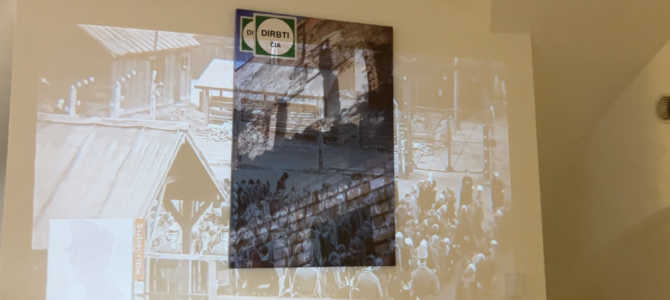
Kovo 25 d. 19 val. kavinėje „Films & Coffee“, įsikūrusioje Šv. Mikalojaus ir Pranciškonų gatvių sankirtoje, atsidarys jungtinė Gedimino Duboniko ir Vytauto Tinterio paroda, skirta priminti apie iki Antrojo pasaulinio karo Vilniaus senamiestyje gausiai gyvenusią litvakų bendruomenę.
Joje bus galima išvysti G. Duboniko fotografijas, darytas senu, prieš beveik šimtmetį pagamintu anglišku „Hawk Eye“ aparatu. Jose vaizduojamos senamiesčio gatvės, atspindinčios buvusio Vilniaus geto gyvenimą.
„Nors fotomenas man – tik laisvalaikio užsiėmimas, kurdamas šiuos darbus stengiausi itin subtiliai perteikti laikmečio atmosferą. Tai darbai, kalbantys ne tik apie Vilnių ar Lietuvą, bet ir apie visą Europą. Ir ne tik apie XX amžių. Juk to, kas vyko Antrojo pasaulinio karo metu, apraiškų būta ir viduramžiais bei dar anksčiau. Parodos žiūrovui primenu tokius istorinius įvykius kaip knygų deginimas, priverstinis darbas, gyvenimas getuose, pogromai ir t. t.“, – sako Gediminas Dubonikas.
Jis atskleidžia, kad vienas paveikslas skirtas ir akademikės, germanistės, pedagogės I. Veisaitės atminimui. „Ji buvo įsitikinusi, kad blogiausias dalykas, galintis užkrėsti žmogų, yra neapykanta. Todėl, visada vadovavosi Holokausto metu žuvusios motinos duotu principu – nekeršyti. I. Veisaitės požiūris – sektinas pavyzdys mums visiems, ypač šiais, gilaus susipriešinimo laikais“, – pasakoja vienas parodos organizatorių.
EN
Exhibition / Joint Art Project at the „Films & Coffee” Art Space
Vilnius is a city where people of various nations and religions lived harmoniously for centuries. Every street in the capital speaks of the vibrant and colorful life that once bustled here. To remind us of this, director Vytautas Tinteris and genealogist Gediminas Dubonikas have joined forces and invite you to an exhibition of paintings and video projections, according to a press release.
On March 25 at 7:00 PM, a joint exhibition by Gediminas Dubonikas and Vytautas Tinteris will open at the „Films & Coffee” cafe, located at the intersection of Šv. Mikalojaus and Pranciškonų streets. The exhibition is dedicated to remembering the Litvak community that vibrantly inhabited the Vilnius Old Town before World War II.Visitors will be able to see G. Dubonikas’ photographs, taken with an old, nearly century-old „Hawk Eye” camera.
They depict the streets of the Old Town, reflecting life in the former Vilnius Ghetto.”Although photographic art is just a leisure activity for me, while creating these works I tried to subtly convey the atmosphere of that era. These are works that speak not only about Vilnius or Lithuania, but about the whole of Europe. And not just about the 20th century.
After all, the events of World War II had variations in the Middle Ages and even earlier. I remind the viewer of historical events such as book burning, forced labor, life in ghettos, pogroms, etc.,” says Gediminas Dubonikas.He reveals that one piece is dedicated to the memory of academic, Germanist, and educator Irena Veisaitė.
„She believed that the worst thing that could infect a person is hatred. Therefore, she always followed the principle given by her mother, who died during the Holocaust – not to seek revenge. I. Veisaitė’s attitude is an exemplary model for all of us, especially in these times of deep division,” – shares one of the exhibition organizers.
III. Lauko paroda rugpjūčio savaitgaliais
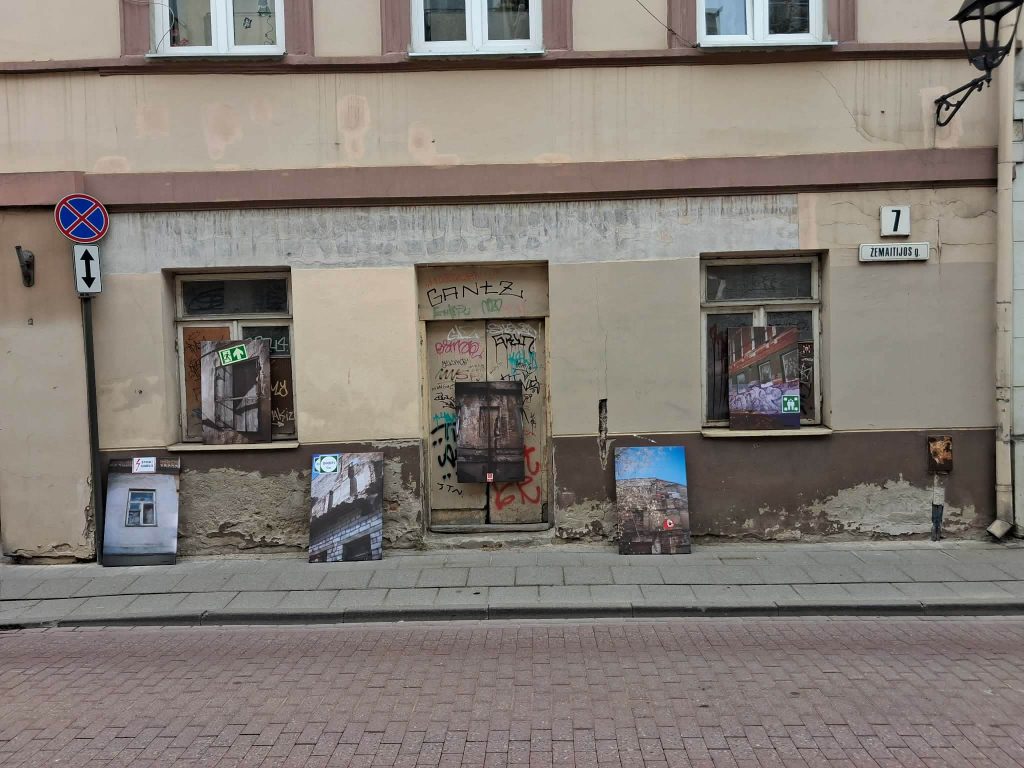
Rugpjūčio savaitgaliais Žemaitijos gatvėje, prie išlikusių senųjų žydų pastatų, buvusios jų parduotuvės, bromo prieigų ir kitose vietose buv eksponuojama Gedimino Duboniko paroda „Žemaitijos gatvės bliuzas”.
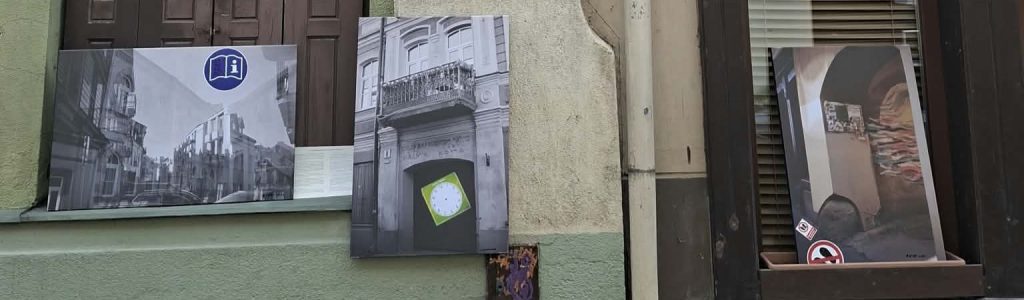
„Tai jau trečioji fotopaveikslų serijos „Žemaitijos gatvės bliuzas” paroda šiemet. Žemaitijos gatvėje išliko ypač daug žydų kultūros paveldo – nuo pastatų iki Dovydo žvaigždės simbolio ant mūrinės pastato sienos. Norisi, kad mano kūriniai tarsi įsilietų į šios gatvės peizažą. Tai bus tarsi gyvoji istorija, kalbanti meno kalba”, – sako Gediminas Dubonikas.
EN
III. Open-air Exhibition on August Weekends
On weekends in August, Gediminas Dubonikas’ exhibition „Žemaitijos Street Blues” („Žemaitijos gatvės bliuzas”) will be on display on Žemaitijos Street – near the surviving historic Jewish buildings, their former shops, the gateway (broma) approaches, and other locations.
„This is already the third exhibition of the ‘Žemaitijos Street Blues’ photo-painting series this year. A particularly large amount of Jewish cultural heritage has survived on Žemaitijos Street – from the buildings themselves to the symbol of the Star of David on a brick wall. I want my works to seamlessly blend into the landscape of this street. It will be like living history speaking through the language of art,” – says Gediminas Dubonikas.